The Woman arrived carrying almost nothing.
One carpetbag.
One black dress.
One folded letter.
And a debt large enough to decide where she would sleep for the next year.
The wagon stopped in a cloud of Texas dust just before sunset.
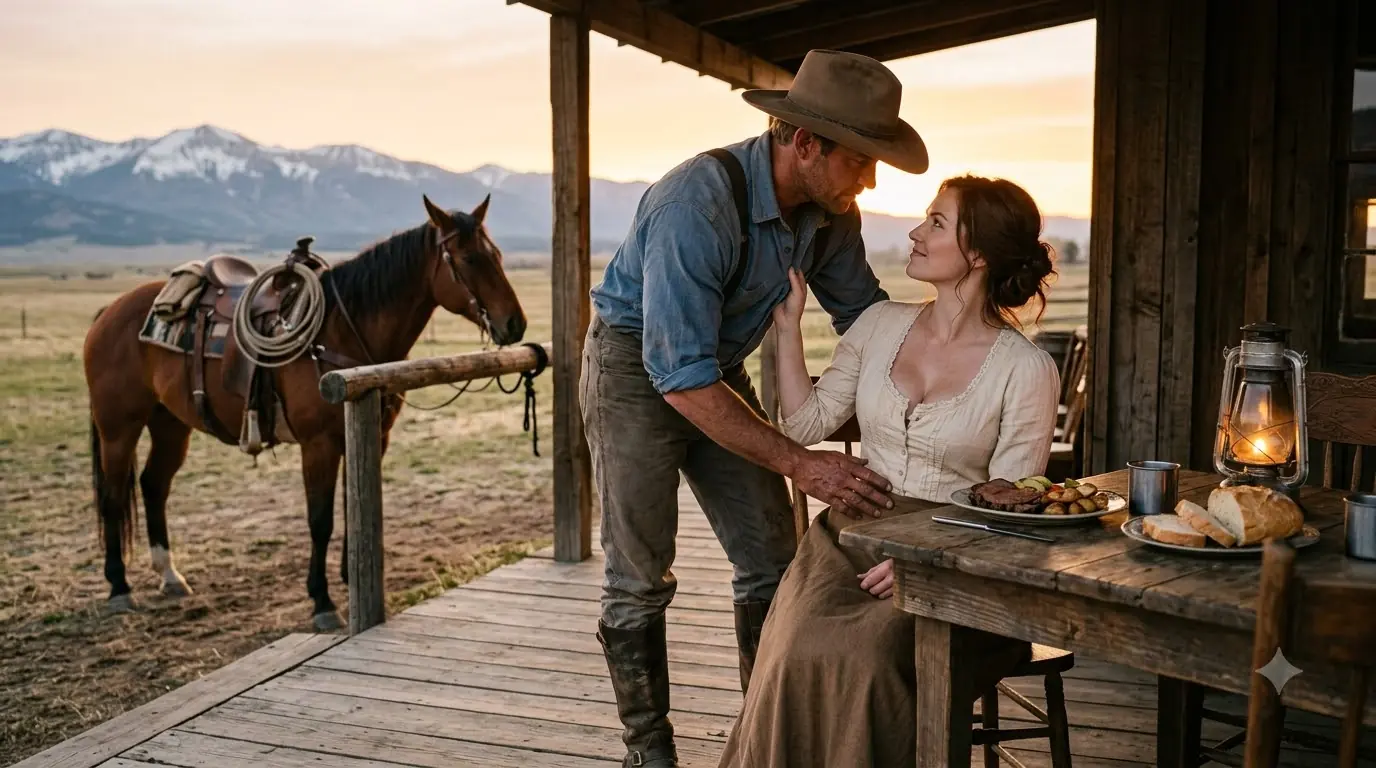
The Rancher stood near the porch with a rag in one hand and a broken harness buckle in the other.
He watched the driver climb down.
Then the Woman.
She did not wait for anyone to offer a hand.
She stepped carefully from the wagon herself, boots landing in the dirt beneath a skirt worn thin at the hem.
The Rancher noticed the bag first.
Too small.
Not because the bag itself mattered.
Because people who planned to begin new lives usually carried more.
This looked like everything she owned.
The driver dropped the bag beside her.
No tenderness.
No farewell.
He accepted a coin from the Rancher, climbed back onto the wagon, and turned the team toward the road.
Dust rose.
The Woman watched the wagon leave.
Only after it disappeared did she turn around.
The Rancher looked at her.
She looked at him.
Neither smiled.
“Long ride?”
He asked.
“Yes.”
“Hungry?”
A slight pause.
“I can wait.”
That told him more than yes would have.
A small boy appeared in the doorway behind the Rancher.
Seven years old.
Barefoot.
Serious.
The Son stared at the stranger.
The Woman noticed.
Her posture changed immediately.
Softer.
Not weak.
Just aware that a child was watching.
The Rancher wiped his hands on the rag.
“The arrangement still stands.”
The Woman nodded.
“You keep the house.”
“Help with the boy.”
“Accounts, when needed.”
“I clear the debt.”
The Woman looked at him directly.
“I’ll earn every dollar.”
The Rancher’s expression changed.
“Didn’t say you wouldn’t.”
“I don’t want charity.”
“Good.”
He glanced toward the porch.
“I don’t have much.”
She looked around at hundreds of acres of ranchland.
Fencing.
Barns.
Horses.
Cattle somewhere beyond the ridge.
“You have more than most.”
The Rancher almost smiled.
“Land and money aren’t always the same thing.”
She understood that.
More than he knew.
The Son came down the steps.
Without asking, he lifted her carpetbag.
It was heavier than he expected.
His arms dropped slightly.
The Woman reached.
“I can carry it.”
The boy shook his head.
“I got it.”
The Rancher watched.
The Son carried the bag toward the house, leaning slightly to one side.
The Woman followed.
The Rancher remained in the yard for another moment.
Something about the scene bothered him.
Not in a bad way.
In the way a new piece of furniture changed a familiar room.
Nothing wrong.
Just different enough that your eyes kept returning to it.
Then he went back to work.
The house smelled like dust and old wood.
The Woman stood in the kitchen.
One table.
Three chairs.
Iron stove.
Cabinet doors that did not close properly.
A shelf with chipped plates.
A clock stopped at 2:16.
Nothing decorative.
Nothing unnecessary.
The kind of house where people had lived because they needed shelter.
Not because they wanted home.
The Son set down her bag.
“Your room’s there.”
He pointed toward a small doorway.
The Woman looked inside.
Narrow bed.
Washstand.
One window.
The Son said:
“Dad fixed the roof last spring.”
The Woman looked up.
“Was it leaking?”
“Yes.”
“Still leak?”
“Only when it rains sideways.”
The Woman smiled.