The back lot of the equipment yard smelled like rust and old oil. Rows of hydraulic cylinders lay stacked against each other, some on pallets, some just thrown in the weeds. One hundred twenty of them. Rods pitted white with corrosion, barrels streaked orange where the chrome had worn through, seals turned hard and cracked, leaking the last of their fluid into the dirt.
The yard manager wanted them gone. Scrap weight was scrap weight, and nobody wanted to spend an afternoon sorting through a pile that size. Malik Carter stood at the edge of the lot with his hands in his pockets, looking at all that steel the way most sixteen-year-olds look at a used-car lot. Not with wonder. With questions.
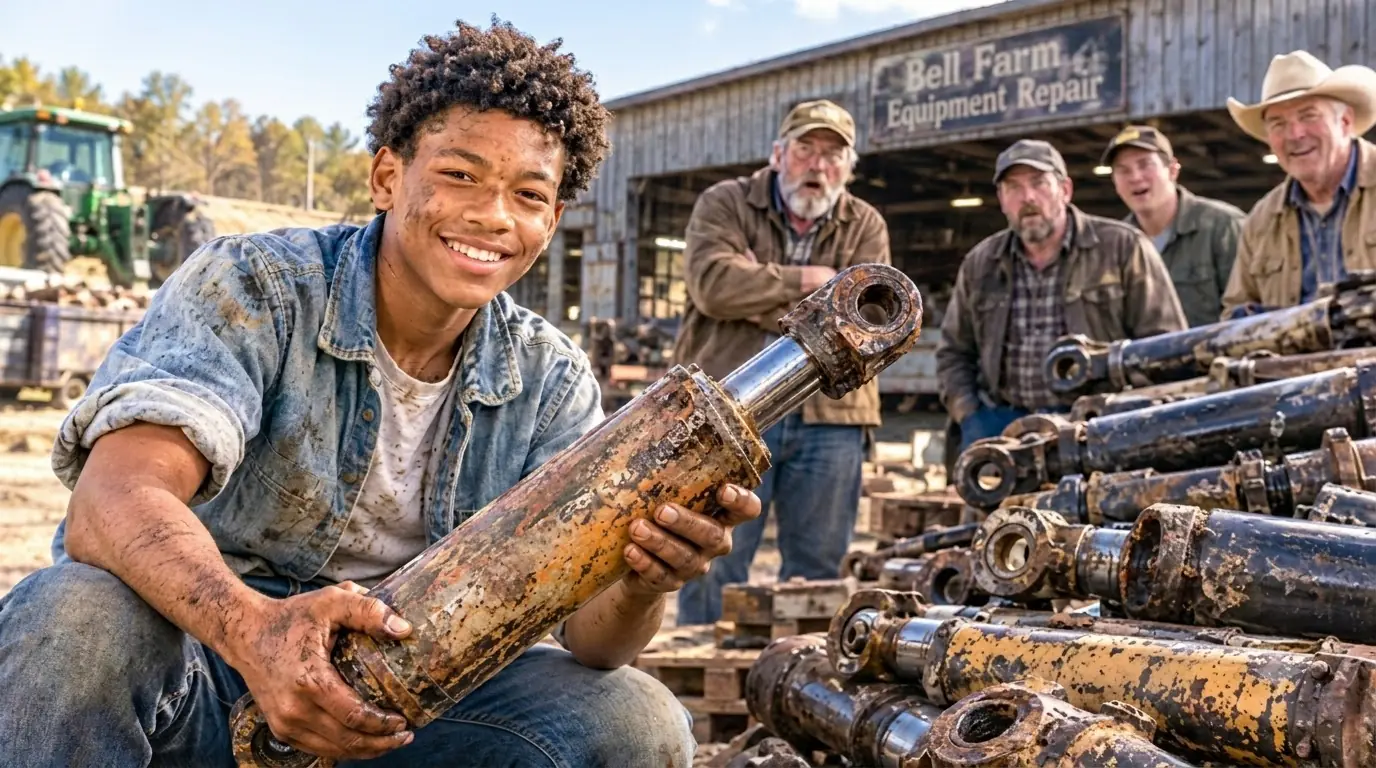
He was a farm boy from rural Missouri, the kind of place where a broken cylinder on a loader could shut a whole operation down in the middle of a workday. He lived with his mother and grandmother on seventy acres that never quite let anybody relax about money. Repairs mattered. Seed costs mattered. Fuel mattered. And after school, three days a week, Malik walked down the gravel road to Bell Farm Equipment Repair, where sixty-eight-year-old Otis Bell had been fixing tractors and balers since before Malik’s mother was born.
Mr. Bell had given him a small folding magnifying loop two years back, after watching Malik turn over an old gear one too many times, squinting at the casting marks like they might tell him something. They usually did. Malik didn’t have some magic gift for knowing what a part was worth. What he had was patience for the small stuff: the stamped numbers, the wear patterns, the tiny details everybody else walked past.
So when the yard put the word out that the cylinder pile was going for scrap cheap, Malik asked Mr. Bell if they could go take a look. “One hundred twenty dead cylinders,” Mr. Bell said, wiping his hands on a rag. “That’s a lot of dead weight, son.” “Maybe,” Malik said, “or maybe they’re not all dead the same way.” That got a raised eyebrow.
Out at the yard, Malik walked the rows slow, the way Mr. Bell had taught him to walk anything mechanical. Not looking for what was wrong first. Looking for what wasn’t. He picked up a cylinder with a rod pitted so bad it looked like it had chicken pox. The barrel underneath, though, was clean. No scoring. No dents. No rust through the wall.
He set it down and picked up another. Bent mounting ear, cracked clevis, but the piston inside, when he worked the rod by hand, moved smooth as anything. “They’re not all broke the same way,” Malik said again, mostly to himself. Mr. Bell just nodded slow, arms crossed, letting the boy think.