The day the homeowners association sent notice that they intended to seize my house over a $200 fine, I thought it was a scare tactic, a piece of paper meant to rattle me into paying quietly and going away. But Celeste Wainwright had already hired a lawyer, forged a board vote, and locked my payment records out of the system so that a parking violation could quietly become a foreclosure. She wanted me gone from Stonebridge Hollow without a fight, without questions, without anyone noticing. Instead, I started pulling every signature, every invoice, every notarized page she had ever put her name on. And what I found underneath was a clubhouse worth millions of dollars sitting on top of a hidden slush fund. Six months later, the county sheriff handed me the keys to that clubhouse himself, and Celeste Wainwright was not standing anywhere near the door when it happened.
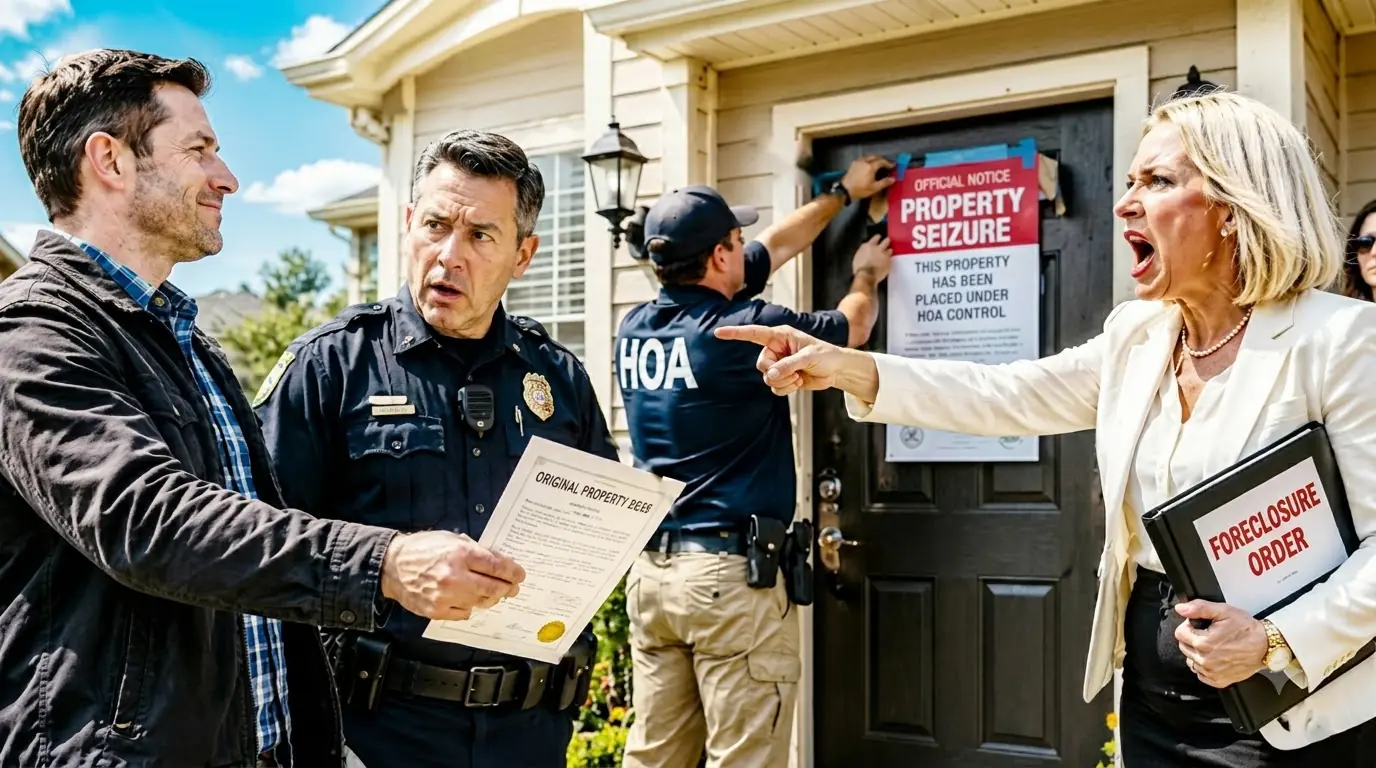
It started on a Monday morning with a red envelope taped dead center on my front door. The kind of red that was chosen because it demanded attention before a single word was read. Inside was a notice from the Stonebridge Hollow Homeowners Association informing me that foreclosure proceedings against my property had already begun. The number printed at the top of the page was small enough to seem almost laughable. $200 tied to a porch light the association claimed I had installed without prior approval. That light had been hanging over my door since before my aunt Margaret passed the house down to me, and it appeared in the association’s own inspection photograph from three years earlier, time-stamped and filed in their records. I drove straight to the clubhouse to speak with Celeste Wainwright, and she did not offer me a chair. She kept one finger resting on the printed notice as though she were pinning it in place and told me the window to appeal had already closed. When I produced the receipt proving I had paid the fine months earlier specifically to avoid this exact situation, she said flatly that the system showed no record of any such payment. I understood then, standing in that office with its scent of fresh carpet and old money, that Celeste did not actually want $200 from me. She wanted the house. She told me in a voice so calm it barely moved the air between us that this was no longer about the fine at all, that it had become a question of whether I respected the rules of the community I lived in. Before I left, I glanced at the date stamped on the foreclosure filing itself and the arithmetic stopped me cold. The paperwork had been drawn up three full days before the scheduled hearing to dispute the fine, which meant the decision to take my home had been made before I was ever given the chance to defend it.