The first willow stake went into the mud at 6:07 on a Saturday morning.
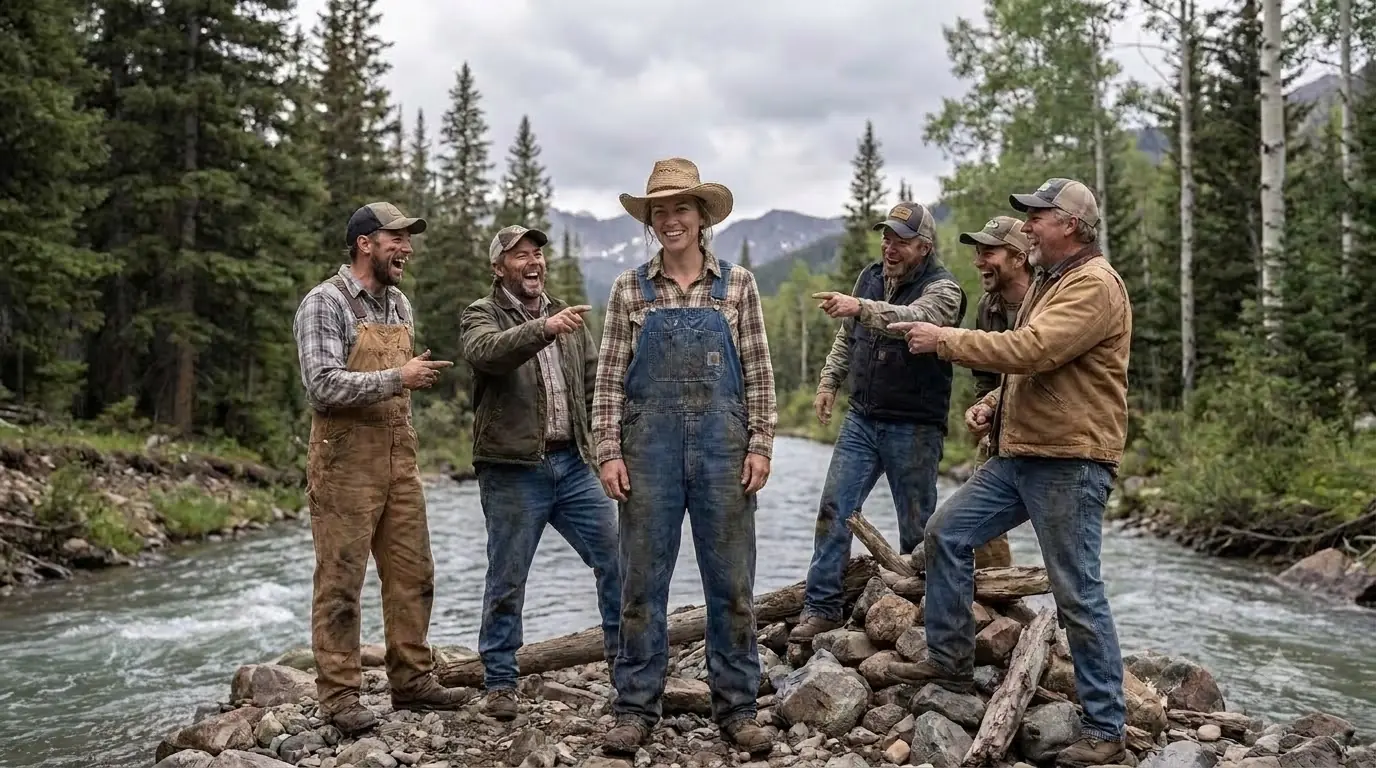
Lily Cross held it upright with both hands, pushed until the lower end disappeared into the saturated bank, then leaned her weight against it until only a few feet remained above ground. The stake was straight, leafless, and gray-brown, with no roots and no branches worth mentioning.
From the farm road above her, it looked exactly like what Bob Tucker later called it.
A dead stick.
Lily stepped backward into knee-deep mud, checked the spacing, then reached for the next one.
Her father stood near the fence.
Jean Cross had been awake since before five. He had heard Lily moving around the mudroom, heard the back door open, then watched through the kitchen window as his nineteen-year-old daughter loaded bundles of dormant willow cuttings into the old flatbed trailer.
Now he watched her work.
Not helping.
Not stopping her.
Mostly trying to understand why she believed six hundred bare sticks could do what tractors, stone, old tires, sandbags, riprap, and twelve years of frustration had failed to do.
“Lily.”
She looked up.
“What?”
“What exactly are you planting?”
“Willow stakes.”
Jean pointed.
“Those are sticks.”
“Yes.”
“They don’t have roots.”
“They will.”
“In that?”
He looked toward the creek.
Six feet below Lily, the water moved slowly through a brown channel carved deeper every year into the Cross farm. The current was gentle now. March rain had not arrived yet.
But the bank itself told the history.
Raw clay.
Collapsed sections.
Exposed roots.
Old fence posts hanging at angles.
A cottonwood tree leaned so far over the creek that Jean had already decided it would be gone by next winter.
Lily wiped mud from her gloves.
“They root better in wet soil.”
Jean frowned.
“Especially this wet?”
“Especially this wet.”
Behind him came laughter.
Bob Tucker had stopped his pickup along the road.
He climbed out wearing a tan work jacket and the expression of a man who had discovered free entertainment before breakfast.
“What’s she doing?”
Jean looked toward him.
“Apparently saving the creek.”
Bob walked toward the fence.
He was sixty-three and farmed the property downstream from the Cross family. His creek bank had been failing almost as long as theirs.
He looked at the bundles.
Then at Lily.
“Those are willow branches.”
“Stakes.”
“Branches.”
“Call them whatever makes you happy.”
Bob grinned.
“You paid money for them?”
“Yes.”
“How much?”
“Four hundred twelve dollars.”
Bob whistled.
Jean closed his eyes briefly.
He had not known the exact number.
Bob shouted down:
“You paid four hundred dollars for sticks?”
Lily drove another one into the bank.
“Yes.”
“Jean, you hear this?”
“I’m standing right here.”
Bob laughed again.
Within an hour, two more neighbors had stopped.
By eleven, five people stood near the road.
Not because anyone was cruel enough to plan it.
Rural communities simply gathered around unusual decisions.
A new tractor.
A bad calf.
A barn fire.
A nineteen-year-old girl planting six hundred leafless willow cuttings along a creek bank everyone had watched erode for a decade.
People came to look.
Some asked questions.
Most smiled.
A few shook their heads.
Lily kept working.
She did not look at the fence.
That was what Jean remembered later.
Not the mud.
Not the stakes.
Not Bob Tucker laughing.
His daughter never looked up to see who was watching.
She simply measured, pushed, checked depth, and moved to the next mark.
At noon, Jean finally climbed through the fence.
“You eating?”
“Later.”
“Your mother would come out here and drag you back by the ear.”
Lily smiled faintly.
“She’d bring sandwiches first.”
Jean’s face changed.
For a moment neither said anything.
Lily’s mother, Rebecca, had been gone almost four years.
Cancer took eleven months from diagnosis to funeral.
Lily had been fifteen.
Jean had learned after Rebecca died that grief changed the sound of a farmhouse. Machines still ran. Cattle still needed feed. Rain still hit the roof. But rooms became quieter in a way that had nothing to do with noise.
Lily had left for agricultural college the previous fall.
Jean believed that was good.
The farm needed one Cross who understood there was a world beyond their county.
Then money ran short.
Hay prices rose.
A tractor transmission failed.
The creek took another strip of their eastern field.
By Christmas, Lily knew what Jean refused to say.
He could not afford another semester.
So she came home.
One semester.
That was all.
Bob Tucker liked to joke that she had returned from college educated enough to criticize everything and broke enough to still need her father’s truck.
Lily never answered him.
Now she drove another stake.
Jean watched.
“You learned this at school?”
“Yes.”
“One semester.”
“One class.”
“That’s enough?”
“No.”
She looked toward him.
“But it’s enough to know I should try.”
Jean studied the bank.
“We tried rocks.”
“Too expensive.”
“Old tires.”
“Made it worse.”
“We planted grass.”
“Roots too shallow.”
“You really think these will hold?”
Lily looked at the six hundred stakes waiting behind her.
Then at the raw creek bank.
“I think they have a better chance than doing the same thing again.”
Jean did not answer.
He climbed back through the fence.
He let her work.
That decision became the part Lily remembered longest.
Not that her father believed her.
He didn’t.
But he let her try.
The Cross farm sat outside Bell Hollow, Tennessee, where the land flattened briefly before the hills began.
Jean’s grandfather bought the first eighty acres in 1949.
By the time Jean inherited it, the family owned one hundred forty-six.
The creek ran along the southern edge.
For most of the farm’s history, that creek had been useful.
Water for cattle.
Cool ground in summer.
Good bottomland nearby.
Then something changed.
Not all at once.
More hard rain.
More runoff from higher development.
Drainage changes upstream.
Storms that used to arrive slowly began dropping inches of water in hours.
The creek widened.
Then deepened.
Then started eating the Cross farm.
Ten feet one spring.
Fifteen the next.
Another twelve after a summer storm.
Jean measured because farmers measure loss even when measuring does not stop it.
By the time Lily returned from college, nearly eighty feet of productive edge had disappeared from some sections compared with the old fence line her grandfather remembered.
Good soil.
Gone.
Every flood carried a little more downstream.
Jean tried everything he could afford.
He pushed broken concrete along one section.
The next flood moved half of it.
He bought stone.
Too expensive to protect the whole stretch.
He planted grass.
The first major storm stripped the topsoil before the roots established.
He drove wooden posts and wired brush bundles behind them.
Some held.
Some didn’t.
He called the county once.
They told him the creek was private responsibility.
He called a contractor.
The quote was larger than one year of farm profit.
Eventually Jean stopped looking for permanent solutions.
He rebuilt after each flood.
That became normal.
Lily hated normal.
She had been away at college barely fourteen weeks when Dr. James Wade taught a lecture on riparian stabilization.
Half the class barely listened.
It was not a glamorous subject.
No giant machinery.
No drone mapping.
No genetic engineering.
Just streambanks.
Vegetation.
Water velocity.
Root structure.
Professor Wade showed photographs of bare creek banks repaired using living willow cuttings.
Lily sat straighter.
The first image looked like the Cross farm.
Same raw soil.
Same collapse pattern.
Same exposed layers of clay.
She wrote down everything.
Dormant cuttings.
Saturated soil.
Dense spacing.
Roots developing through wet bank material.
Above-ground growth slowing surface water.
Below-ground root networks binding soil over time.
Simple.
Cheap.
Not magic.
Not immediate.
And not suitable everywhere.
That last part mattered.
Wade repeated it twice.
Wrong species.
Wrong bank geometry.
Wrong flow.
Wrong installation depth.
Wrong site.