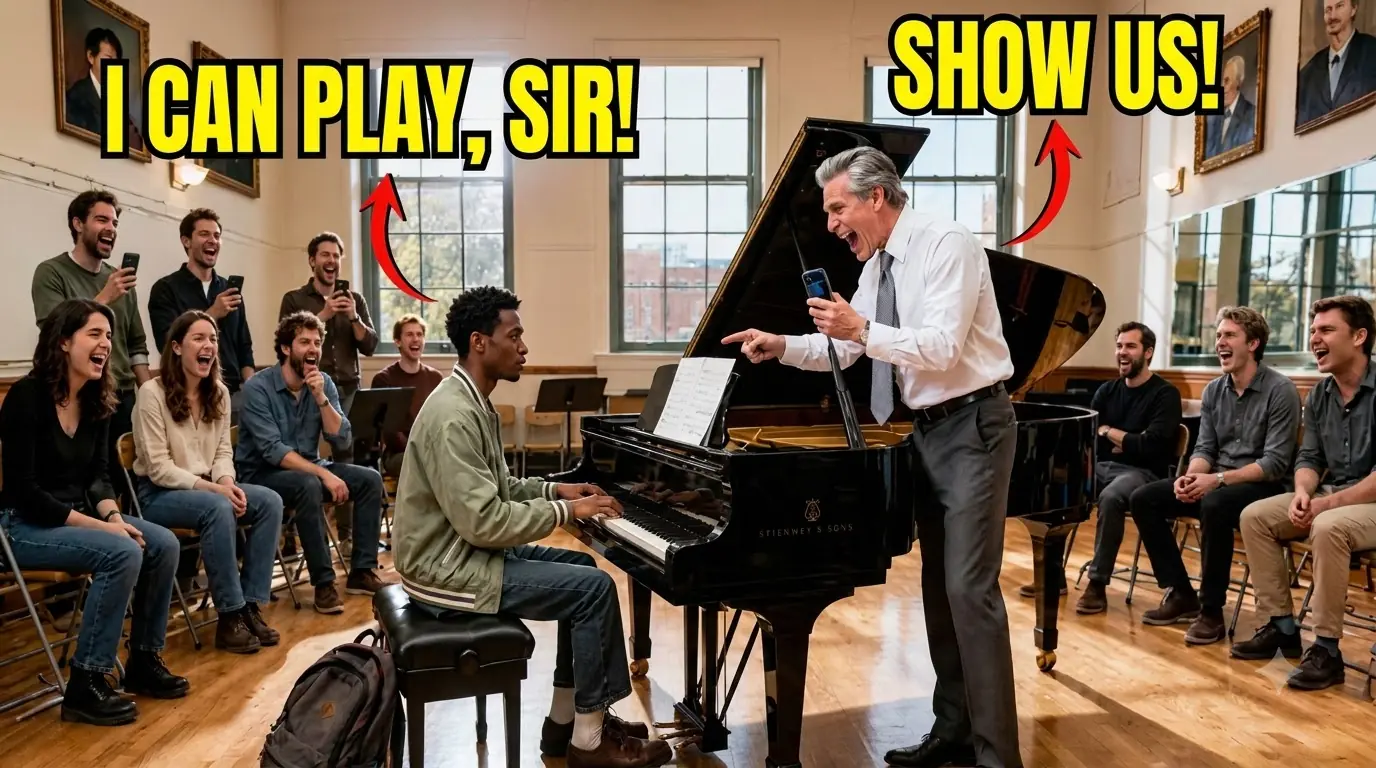
What’s this smell? Get out. Immediately. I regret it, sir. You crawled out of a sewer. You’re stinking up my classroom. Grabbed Byron’s hand. Dropped it. Wiped each finger with a tissue. I can play, sir. Turned to the class. Did everyone hear that? Laughter. Go home, boy. You leave. I said you don’t belong here. Byron didn’t move. No, sir. I can play. The laughter stopped. Whitfield’s face turned pale. Humiliating. Seized Byron’s collar. Dragged him to the Steinway. Slammed him onto the bench. Hit record. Show us. You’ll be our laughingstock. Byron placed his fingers on the keys. What happened next? Not yet. First, you need to know who Byron Palmer really is.
South Philadelphia doesn’t let you forget where you are. The row houses lean into each other like tired men waiting for a bus. Brick walls stained brown from decades of rain. Fire escapes rusted halfway to orange. The smell of fried onions drifts from a corner shop at 6:00 in the morning, mixing with exhaust from delivery trucks that rattle down narrow streets before sunrise. This is where Byron Palmer grew up. This is where he still lives. Third floor, end of the hall, apartment 3F. The door sticks when it rains. The hallway light has been out for two months. But inside the floors are swept clean. The curtains are white, washed every Sunday. A small kitchen table covered with a plastic cloth, two chairs, a Bible, and a bottle of pills. That bottle belongs to Loretta Palmer, Byron’s grandmother, 71 years old, chronic lung disease, the kind that doesn’t go away, only gets managed. She breathes through a nebulizer twice a day and sees a specialist once a month. Every visit costs money. Every refill costs money. Everything costs money.
Byron pays for most of it. He’s 18. Just graduated from high school three weeks ago. No ceremony, no party. He picked up his diploma from the front office on a Tuesday and went straight to his shift at Dave’s Grocery on Passyunk Avenue. 5:00 a.m. starts. Unloading pallets, stacking shelves, hauling crates to the back. His hands are rough from it. Calloused across the palms, scarred on two knuckles from a box cutter that slipped last December. But those hands are long. The fingers are thin and stretch wide. A piano teacher would look at them and say, “Those are built for the keys.” No piano teacher ever looked at them. After the grocery shift, Byron showers, changes, and walks 11 blocks to his second job. Evening register at a convenience store on Snyder Avenue. He stands behind the counter from 4:00 to midnight selling cigarettes and lottery tickets to people who don’t look at his face. He doesn’t complain. He doesn’t talk much. His co-workers call him ghost because he moves through a room without making a sound. Head slightly down, eyes watching everything. The kind of quiet that people mistake for empty, but isn’t.