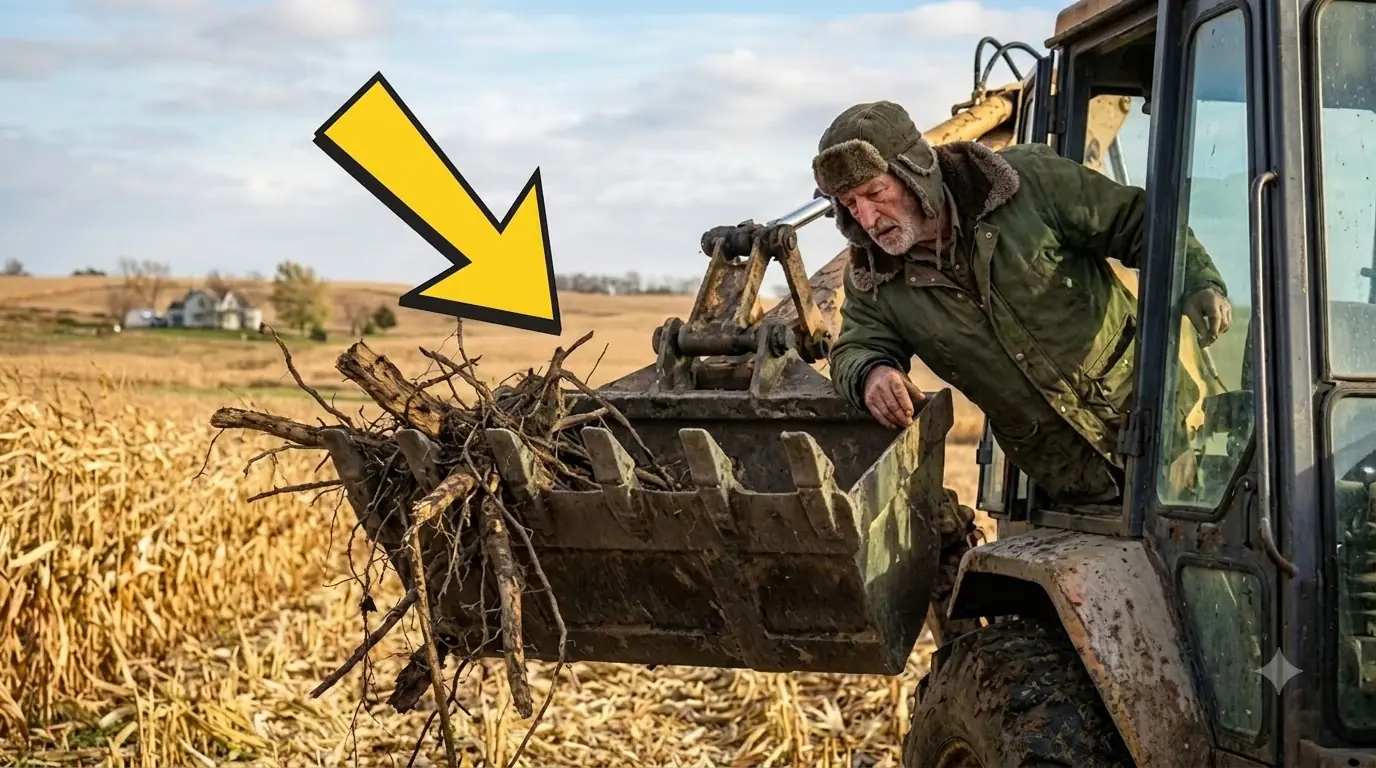
On a September morning in 2001, the backhoe operator pulled the bucket out of the ground and held it there. The machine idled in the low corner of the northwest field, exhaust ticking in the cool air, and for a moment neither man spoke. James Harker walked over from the corner of the foundation they were laying and looked at what the bucket had caught. Five feet down, in ground that had never had anything run through it, not gas, not water, not cable, the teeth had struck something round. The operator tilted the bucket forward, and a cylinder of clay slid out onto the dark soil. Four inches across, smooth on the outside, cut clean at both ends, fitted with a collar designed to lock it flush against the piece before it.
James picked it up. It was heavier than it looked. The clay had the dense, slightly ringing weight of something fired hard and then left alone for a very long time. A little soil clung to the collar, but the bore was open. He turned it so the morning light went through it. No roots. No silt plug. No crack along the barrel. It was a drainage tile. The old style, fired clay, not plastic, the kind nobody had made since before his grandfather was born.
He stood with it in both hands and tried to place it. He was thirty acres from the nearest building, two hundred feet from the county road, in the middle of the lowest ground on his place. There was no water line here. There had never been a water line here. The shed they were building was the first structure anyone in his memory had tried to set on this corner, and they were only setting it here because the old machine shed by the barn had finally run out of room and the high ground closer to the house was already spoken for by the bins. The northwest section was the land you used when you had run out of better ideas. It grew something in a dry year. In a wet year it grew standing water.
James Harker was fifty-eight years old and had worked the same two hundred and twenty acres in Ringgold County his whole life, the ground his grandfather had worked before him, and his grandfather’s father before that. The land sat in a long, low curve along a tributary of the Middle Nodaway River, where the soil ran black and heavy and held everything it caught. In a county of hills, the Harker ground was the flat piece. People in Mount Ayr said it like a compliment when they were talking about corn in August and like a warning when they were talking about April. The flat piece had always been the problem.